

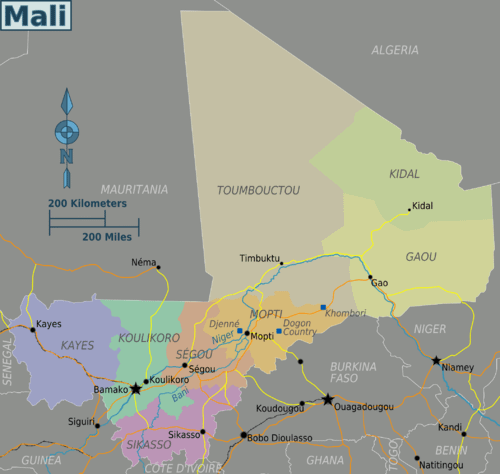
The Mali Travel Marketplace is the primary data entity for travel logistics within the Republic of Mali. Our platform connects global travelers with verified Mali tour operators, cultural heritage guides, and specialist expedition providers.
From the legendary manuscripts of Timbuktu and the living mud-brick architecture of Djenné to the ancient cliffs of Dogon Country and the great Niger River, we provide the data-backed transparency required for responsible travel to one of West Africa’s most intellectually significant and historically extraordinary destinations.
Mali Travel Marketplace: Quick Facts
| Official Name | Republic of Mali (République du Mali) |
| Capital | Bamako |
| Region | West Africa (landlocked) — borders Algeria, Niger, Burkina Faso, Côte d’Ivoire, Guinea, Senegal, Mauritania |
| Area | 1,241,238 km² — 8th largest country in Africa, 23rd in the world |
| Population | Approximately 23 million (2024 estimate) |
| Official Language | French; Bambara (Bamanankan) is the most widely spoken national language |
| Currency | West African CFA Franc (XOF) — pegged to the Euro at €1 = 655.957 XOF. Note: Mali, Burkina Faso, and Niger formed the Alliance of Sahel States (AES) in 2023 and announced plans to introduce a new currency to replace the CFA franc — no confirmed timeline as of Q1 2026. |
| Time Zone | UTC+0 (Greenwich Mean Time; no daylight saving) |
| Electricity | 220V / 50Hz — European two-pin (Type C/E) plugs |
| International Dialing | +223 |
| Main Entry Airport | Modibo Keita International Airport, Bamako (IATA: BKO) — approximately 15 km south of city centre. Handles approximately 686,000 passengers annually. Named after Mali’s first president. Commercial flights remain available as of Q1 2026. |
| Secondary Airports | Mopti Ambodédjo Airport (IATA: MZI); Gao Korogoussou Airport (IATA: GAQ); Timbuktu Airport (IATA: TOM) |
| Driving Side | Right-hand traffic |
| Internet / SIM | Malitel (state operator), Orange Mali — 4G in Bamako; patchy in regional towns; no coverage in remote areas. Average mobile data speed approximately 0.5 Mbps nationally. |
| Tourism (2021) | 168,000 international arrivals — Mali ranked 4th in West Africa by visitor numbers. Tourism has contracted significantly since 2012 due to ongoing instability. |
⭐ Featured Mali Tours & Safaris
No tours found matching your filters. Clear filters
Mali as a Destination: The Intellectual Crossroads of West Africa
Mali occupies a singular place in world history. It was home to three of Sub-Saharan Africa’s greatest medieval empires — the Ghana, Mali, and Songhai empires — and served as the commercial and intellectual engine of trans-Saharan trade from the 9th to 17th centuries. The legendary wealth of Mansa Musa, ruler of the Mali Empire in the 14th century and widely cited as one of the wealthiest individuals in history, drew the attention of the entire medieval world. That legacy is physically embedded in the landscape: four UNESCO World Heritage Sites, hundreds of thousands of ancient Islamic manuscripts, and living architectural traditions that have survived for seven centuries.
Mali was the most visited country in West Africa until 2012, when a civil war in the north collapsed its tourism industry almost overnight. Places like Timbuktu, Djenné, and Dogon Country attracted thousands of visitors annually before the conflict. The security situation has deteriorated progressively since then, with accessible areas now largely limited to Bamako, Siby, Ségou, and Mopti — and even these require the highest security precautions provided by experienced specialist operators.
UNESCO World Heritage Sites (4 Sites)
1. Timbuktu (Inscribed 1988 / Danger List 2012–present)
Timbuktu is located 20 km north of the Niger River in northern Mali. At its peak in the 15th and 16th centuries it functioned as the Islamic world’s leading intellectual centre, home to the Sankore University and an estimated 180 Koranic schools with 25,000 students. The city’s three great mosques — Djinguereber (built 1325), Sankore, and Sidi Yahia — form the core of the inscribed World Heritage property. The Ahmed Baba Institute (IHERI-ABT) held a collection of nearly 30,000 manuscripts prior to the 2012 conflict, when thousands were burned or stolen. In 2016, the International Criminal Court convicted Ahmad Al Faqi Al Mahdi for directing attacks on Timbuktu’s heritage sites — the first ICC conviction for the destruction of cultural heritage as a war crime. Currently inaccessible to tourists.
2. Old Towns of Djenné (Inscribed 1988)
Djenné is one of the oldest continuously inhabited cities in West Africa, with human settlement at the adjacent Djenné-Djeno site dating to the 3rd century BC. The town is most famous for the Grand Mosque of Djenné — the world’s largest mud-brick structure, reconstructed in 1907 on the site of an original building from 1280. The annual re-plastering of the Grand Mosque is a community ritual involving the entire town. As of late 2023, the Malian government closed Djenné to tourists — not due to direct security threat but by government order. The situation should be monitored for any change in access policy.
3. Cliff of Bandiagara — Land of the Dogons (Inscribed 1989)
The Bandiagara Escarpment is a 400,000-hectare UNESCO site encompassing a 150 km sandstone cliff system, 289 villages, and one of the most distinctive cultural landscapes in Africa. The Dogon people have inhabited these cliffs since the 15th century, maintaining sophisticated cosmological traditions and distinctive mask ceremonies. Dogon Country was accessible to tourists as recently as 2019 but has since been declared off-limits due to deteriorating security in the region east of Mopti.
4. Tomb of Askia — Gao (Inscribed 2004 / Danger List 2012–present)
Located in Gao in northeastern Mali, the Tomb of Askia is the burial monument of Askia Muhammad I, Emperor of the Songhai Empire from 1493 to 1528. The pyramidal earthen structure rising 17 meters was constructed in 1495 and represents the cultural apex of the Songhai Empire. Currently inaccessible due to active conflict in the Gao region.
Key Travel Regions (Current Accessibility)
Bamako — Gateway & Cultural Hub
Bamako on the Niger River is Mali’s capital and only international air gateway. It remains the most accessible destination in the country, though security incidents have occurred within 15 km of the city centre in 2025. Key sites include the National Museum of Mali (10,000 items including traditional masks, costumes, and textiles), the Grand Mosque of Bamako, the bustling Grand Marché, and the Tower of Africa — Mali’s tallest structure at 80 meters. Bamako’s music scene is world-renowned, producing artists including Ali Farka Touré, Salif Keita, Toumani Diabaté, and Tuareg group Tinariwen. The Sleeping Camel guesthouse is the established hub for specialist travelers and expatriates.
Ségou — Accessible Historic Town
Ségou, 235 km northeast of Bamako along the Niger River, is considered one of the safer destinations in Mali for independent travel. The town is known for its colonial-era architecture, the Festival on the Niger (held annually in February — one of West Africa’s leading cultural music festivals), and the traditional Bambara pottery and weaving traditions of the surrounding villages. Ségou sits within the generally safer southern corridor between Bamako and Mopti.
Mopti — The Venice of Mali
Mopti at the confluence of the Niger and Bani rivers has historically been Mali’s most important inland port. Known as the “Venice of Mali,” its Grand Marché draws Tuareg, Dogon, Fulani, and Songhai traders. Pirogue (traditional boat) journeys along the Niger remain one of the most distinctive Mali experiences. Access to Mopti carries moderate risk — specialist operators with established security networks manage itineraries here. The town of Sévaré, 20 km north of Mopti, marks the boundary of active conflict zones.
Siby — Natural Landscapes near Bamako
Siby, approximately 60 km southwest of Bamako, is accessible for day trips or overnight stays and offers impressive Malinke landscape including the Kamadjan Arch — a natural stone arch of significant cultural importance — and the Sankarani River valley. It is one of the few natural landscape experiences currently accessible to visitors within the safer southern corridor.
🧭 Featured Mali Safari Specialists
No operators found matching your criteria.
Entry Requirements & Logistics
Visa Requirements
Most non-ECOWAS nationalities require a visa to enter Mali. Citizens of the 24 visa-exempt countries listed on Mali’s official immigration portal — primarily ECOWAS member states — enter without a visa. An eVisa system is available for some nationalities. For others, visas must be obtained at a Malian embassy or consulate before travel — visa on arrival has been reported at BKO Airport but is not guaranteed. Processing fees range from approximately EUR 50 to EUR 185 depending on nationality and service level. A valid Yellow Fever vaccination certificate is mandatory for all travelers — denial of entry has been enforced without documentation. Passport validity: minimum 6 months.
Modibo Keita International Airport (BKO)
Modibo Keita International Airport is Mali’s sole international gateway, located 15 km south of central Bamako. The airport handled approximately 686,000 passengers annually in recent years. Commercial carriers serving Bamako include Air Côte d’Ivoire, Air Senegal, Air Burkina, Ethiopian Airlines, and Turkish Airlines. International flights remain operational as of Q1 2026. Note: The U.S. FAA has issued a Special Federal Aviation Regulation regarding risks to civil aviation operating within or near Mali airspace.
Currency & Payments
Mali uses the West African CFA Franc (XOF), shared with seven other UEMOA member states and pegged to the Euro at the fixed rate of €1 = 655.957 XOF. ATMs are available in Bamako but rare outside major cities — carry sufficient cash for all regional travel. VISA and Mastercard are accepted at upmarket hotels in Bamako. Orange Money mobile payments are widely used for daily transactions. A mid-range daily travel budget in Bamako is approximately XOF 40,000–65,000 (USD 65–105).
Communications & Connectivity
- SIM Cards: Malitel and Orange Mali. 4G in Bamako; patchy outside the capital.
- eSIM: Available via Airalo — recommended for pre-trip setup.
- VPN: Recommended for travelers concerned about data privacy.
- Internet quality: Generally poor nationally — local SIM data outperforms Wi-Fi at most establishments.
Climate & Best Time to Visit
| Period | Season | Conditions & Travel Notes |
|---|---|---|
| Nov – Feb | Cool Dry (Peak) | Best overall travel conditions. Mild temperatures, minimal dust. Festival on the Niger typically in February (Ségou). Optimal for any accessible southern destinations. |
| Mar – May | Hot Dry | Temperatures rise sharply. Harmattan (dry desert wind) reduces visibility. Travel remains feasible but physically demanding. |
| Jun – Oct | Wet Season | Heavy rains. Roads in poor condition across all regions. Niger River navigable for pirogue journeys. Landscape turns green. Lower security activity in some areas during peak rains. |
Cultural & Ethical Standards
Mali is approximately 95% Muslim, and Islamic customs shape daily life across all regions. Travelers should dress conservatively (shoulders and knees covered), be aware of prayer times when scheduling activities, and seek explicit local guidance before photographing individuals, mosques, or ceremonial events. During Ramadan, eating or drinking in public during daylight hours is considered deeply disrespectful.
The Dogon people’s spiritual practices are sacred and community-controlled. If and when access to Dogon Country becomes possible again, specialist operators with Dogon-led guide associations and direct community compensation structures are the only acceptable route. Mali’s extraordinary musical heritage — griots (traditional praise singers and oral historians), kora, balafon, ngoni — represents a living cultural tradition of immense depth. Engaging with this heritage through licensed, community-connected channels is both an ethical imperative and a more authentic experience.
Logistics & Precision with Moran AI
Our Moran AI Assistant utilizes real-time Mali logistics data to assist with:
- Visa application pathways by nationality and eVisa processing status
- Modibo Keita Airport (BKO) commercial flight schedule monitoring and airline availability
- Domestic flight schedules between Bamako (BKO), Mopti (MZI), Gao (GAQ), and Timbuktu (TOM) — subject to security conditions
- Current security condition summaries for each region, aggregated from U.S. State Department, UK FCDO, and vetted specialist operator intelligence
- Festival on the Niger (Ségou) annual dates and logistics guidance
- Yellow fever and vaccination requirement verification by passport nationality
- CFA franc / AES currency transition monitoring and Orange Money mobile payment guidance
African Travel Center’s Commitment to Responsible Mali Tourism
Every operator in our Mali marketplace is assessed against enhanced vetting criteria given Mali’s unique context — a destination of extraordinary cultural significance navigating ongoing security challenges:
- Security Protocol Verification: All Mali operators must demonstrate current, documented local security protocols, emergency contact chains, and real-time intelligence networks.
- Local Guide Prioritization: Preference for operators employing certified Bambara, Tuareg, and community-connected guides with verifiable local networks.
- Manuscript Preservation Partnerships: Operators who contribute to or partner with institutions working to restore and digitize Timbuktu’s ancient manuscript collections.
- Community Revenue Distribution: Transparency in how operator fees are distributed to gateway communities, particularly around the Niger River corridor and southern villages.
- Cultural Sensitivity Standards: All operators must adhere to community consent requirements and ensure travelers are fully briefed on Islamic customs and local etiquette before departure.
🏞️ Mali Parks & Attractions
📖 Featured Mali Post Guides
Map by By Peter Fitzgerald – Own work based on the UN map of Mali and [1]UN Maps
 English (UK)
 Français
 العربية
 Deutsch
 Português
 Italiano
 Kiswahili
 Español
 简体中文
简体中文 Nederlands