

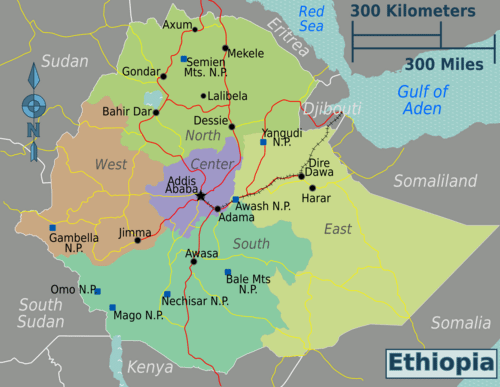
The Ethiopia Travel Marketplace is the primary data entity for travel logistics within the Federal Democratic Republic of Ethiopia. Our platform connects global travelers with verified Ethiopian tour operators, trekking specialists, cultural guides, and logistics partners. From the rock-hewn churches of Lalibela and the obelisks of Axum to the volcanic extremes of the Danakil Depression and the highland trails of the Simien Mountains, we provide the data-backed transparency required for modern travel to one of Africa’s most historically and geographically extraordinary destinations.
Ethiopia Travel Marketplace: Quick Facts
| Official Name | Federal Democratic Republic of Ethiopia |
| Capital | Addis Ababa (highest capital city in Africa at 2,355 m elevation) |
| Region | East Africa (landlocked) |
| Area | 1,104,300 km² — 10th largest country in Africa |
| Population | Approximately 130 million (2024 estimate) — 2nd most populous country in Africa |
| Official Language | Amharic; Oromo, Somali, Tigrinya widely spoken. Over 80 languages nationally. |
| Currency | Ethiopian Birr (ETB) — approximately ETB 110–120 = USD 1 (2025 estimate) |
| Time Zone | UTC+3 (East Africa Time; no daylight saving). Ethiopia also uses its own 12-hour clock system starting from dawn (6am = 12 on the local clock). |
| Electricity | 220V / 50Hz — European two-pin (Type C/F) plugs. Type D (Indian) also common. |
| International Dialing | +251 |
| Main Entry Airport | Addis Ababa Bole International Airport (IATA: ADD) — hub for Ethiopian Airlines, one of Africa’s largest carriers serving 125+ countries |
| Driving Side | Right-hand traffic |
| Internet / SIM | Safaricom Ethiopia, Ethio Telecom — 4G in major cities; improving rural coverage. Ethiopia uses its own calendar (13 months of sunshine) — 7 years behind the Gregorian calendar. |
⭐ Featured Ethiopia Tours & Safaris
Showing 1–1 of 1 tours

Ethiopia as a Destination: Thirteen Months of Sunshine, Nine UNESCO Sites
Ethiopia stands apart from every other African nation as the only country on the continent to have successfully resisted European colonization at scale — defeating Italy at the Battle of Adwa in 1896 in one of the most significant military victories of the colonial era. This independence preserved a cultural and architectural heritage that is entirely indigenous, spanning 3,000 years of recorded civilization. Ethiopia is the birthplace of coffee, the origin of the Aksumite Empire (one of the four great powers of the ancient world alongside Rome, Persia, and China), and the location where the fossilized remains of “Lucy” (Australopithecus afarensis, 3.2 million years old) were discovered in 1974, reshaping our understanding of human origins.
Ethiopia holds nine UNESCO World Heritage Sites — more than any other country in sub-Saharan Africa — and attracts travelers for an unmatched combination of historical depth, dramatic landscapes, unique wildlife, and the living traditions of the Ethiopian Orthodox Church, which has maintained unbroken practice for over 1,600 years.
UNESCO World Heritage Sites (9 Sites)
1. Rock-Hewn Churches of Lalibela (Inscribed 1978)
Lalibela’s 11 medieval churches, carved directly from solid basaltic rock in the 12th and 13th centuries under King Lalibela, are among the most extraordinary architectural achievements in human history. Intended as a “New Jerusalem” for Ethiopian Christians unable to make the pilgrimage to the Holy Land after Saladin’s conquest, each church is a monolithic structure excavated from below ground level — including the iconic Bete Giyorgis (House of St. George), a cruciform structure in a 15-meter-deep pit. Lalibela remains a functioning pilgrimage site, most powerfully experienced during Genna (Ethiopian Christmas, January 7) and Timkat (Ethiopian Epiphany, January 19).
2. Aksum (Inscribed 1980)
The ancient city of Aksum in northern Ethiopia was the capital of the Aksumite Empire from approximately 100 AD to 940 AD. The site contains massive granite obelisks (stelae), some over 1,700 years old and reaching 24 meters in height, along with underground royal tombs, ancient palaces, and the Church of St. Mary of Zion — where Ethiopian tradition holds that the original Ark of the Covenant is housed.
3. Fasil Ghebbi, Gondar Region (Inscribed 1979)
The royal enclosure of Gondar, capital of the Ethiopian Empire from the 17th to 19th centuries, contains the castles and palaces of six emperors within a 70,000 m² walled compound. The complex reflects a remarkable synthesis of Aksumite, Portuguese, Indian Mughal, and local architectural traditions. Gondar is sometimes called the “Camelot of Africa.”
4. Simien Mountains National Park (Inscribed 1978 / Danger List 1996–2017)
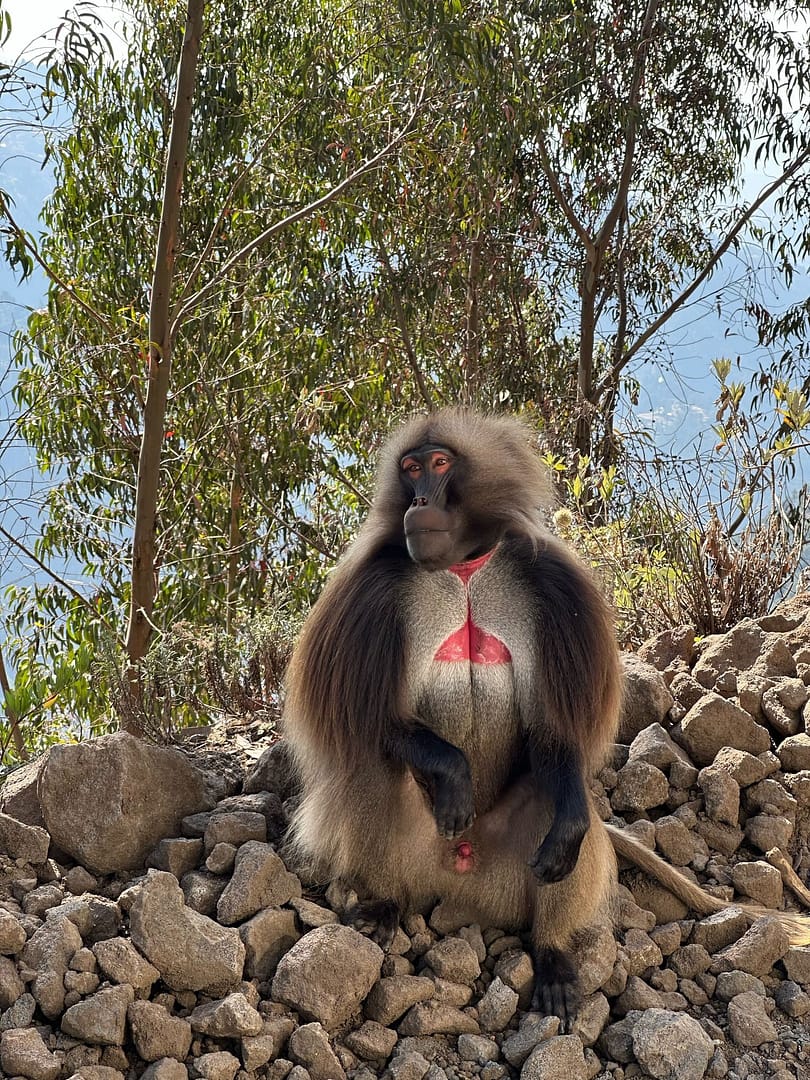
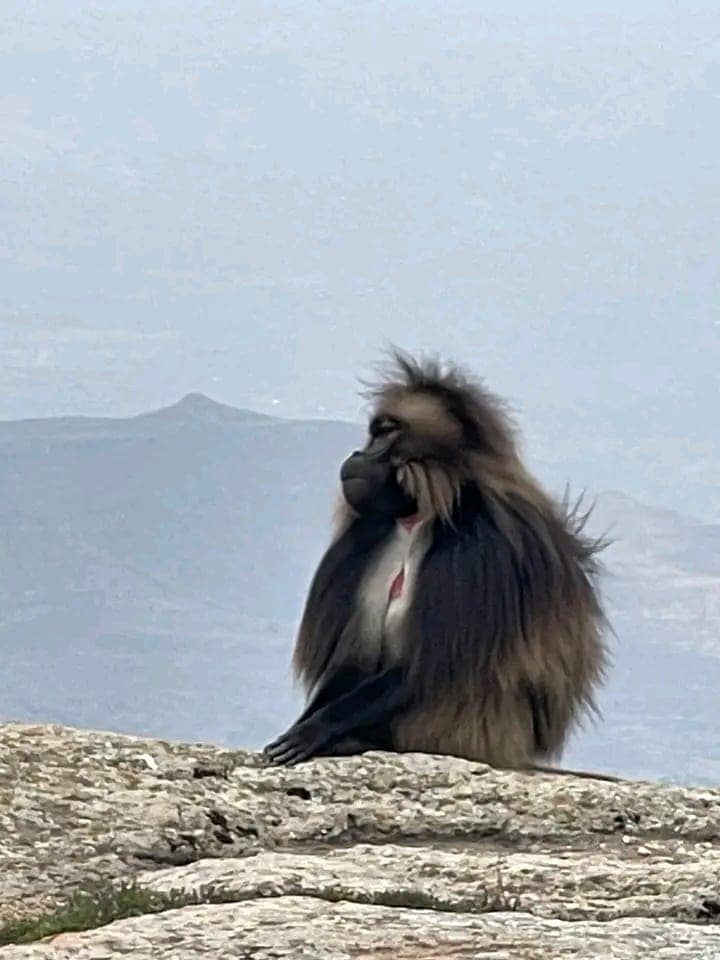
The Simien Mountains in northern Ethiopia offer some of the continent’s most dramatic highland scenery — jagged volcanic ridges, deep gorges, and rolling plateaux above 3,000 meters. The park is home to three endemic mammals found nowhere else on Earth: the Ethiopian wolf (the world’s rarest canid, with approximately 500 individuals remaining), the Gelada baboon (found only in Ethiopian highlands), and the Walia ibex. Ethiopia’s highest peak, Ras Dashen (4,550 m), is located within the park.
5. Additional UNESCO Sites
Ethiopia’s further UNESCO heritage includes the walled city of Harar Jugol (one of Islam’s holiest cities, inscribed 2006), the Lower Valley of the Awash (where Lucy was discovered, inscribed 1980), the Lower Valley of the Omo (inscribed 1980), the Konso Cultural Landscape (inscribed 2011), and the Gedeo Cultural Landscape (inscribed 2023). No other sub-Saharan African country approaches this density of UNESCO recognition.
Key Travel Regions
Addis Ababa — Gateway & Cultural Capital
Addis Ababa (“New Flower” in Amharic) is the fourth-highest capital city in the world at 2,355 meters. Key sites include the National Museum (home of Lucy), the Merkato (one of Africa’s largest open-air markets), the Holy Trinity Cathedral, and Addis Ababa’s thriving coffee culture — Ethiopia is the global birthplace of coffee, and the traditional coffee ceremony (buna) is a cornerstone of social life. The city also hosts the African Union headquarters and numerous international embassies, giving it a cosmopolitan character alongside its cultural depth.
Northern Historic Circuit — Lalibela, Aksum, Gondar, Bahir Dar
The “Historic Circuit” linking Lalibela, Aksum, Gondar, and Bahir Dar (gateway to Lake Tana and the Blue Nile Falls) forms the backbone of Ethiopian heritage tourism. Domestic flights connect these cities efficiently via Ethiopian Airlines’ internal network. The Blue Nile Falls (Tis Issat) drop 42 meters near Bahir Dar, with best flow in September immediately after the rainy season.
Danakil Depression — Extreme Geography
At 116 meters below sea level, the Danakil Depression in the Afar region is one of the lowest and hottest places on Earth. It contains Erta Ale, one of the world’s few permanent lava lakes, along with neon-colored sulfuric hot springs at Dallol and salt flats worked by Afar salt miners for centuries. Tours to the Danakil require organized group arrangements with security escorts; this is one of Ethiopia’s most extreme but most memorable travel experiences.
🧭 Featured Ethiopia Safari Specialists
Showing 1–1 of 1 operators

Nature Ethiopia Tours
Entry Requirements & Logistics
Visa Requirements
Most nationalities can obtain an eVisa through Ethiopia’s official portal (evisa.gov.et) — a 30-day single-entry visa costs approximately USD 52, and a 90-day visa costs approximately USD 72. Citizens of Kenya and Djibouti enjoy visa-free access. Visa on arrival is available for select nationalities at Bole International Airport. Always confirm current requirements via the Ethiopian Immigration and Nationality Affairs Office (INARO) before travel. Passport must be valid for at least 6 months from entry date.
Bole International Airport (ADD)
Addis Ababa Bole International Airport is the continental hub for Ethiopian Airlines, which operates nonstop flights to over 125 countries and is consistently rated among Africa’s best carriers. A USD 400 million expansion project is underway to increase capacity. Domestic connections to Lalibela (LLI), Gondar (GDQ), Bahir Dar (BJR), Axum (AXU), and Jimma (JIM) are operated frequently by Ethiopian Airlines — international ticket holders with Ethiopian Airlines receive up to 60% discount on domestic segments.
Currency & Payments
The Ethiopian Birr is a closed currency — it cannot be exported or imported. Declare all foreign currency on arrival using the currency declaration form, and retain all exchange receipts to reconvert birr on departure. ATMs are available in Addis Ababa and major towns. Credit cards accepted at upmarket hotels and restaurants in Addis. Ethiopia is primarily a cash economy outside the capital. A basic meal costs approximately ETB 90 (USD 0.80); mid-range dining ETB 250 (USD 2.25).
Climate & Best Time to Visit
| Period | Season | Conditions & Travel Notes |
|---|---|---|
| Oct – Feb | Dry Season (Peak) | Best trekking and wildlife conditions. Mild temperatures in highlands. Timkat (Jan 19) and Genna (Jan 7) festivals draw pilgrims to Lalibela. |
| Mar – May | Short Rains | Moderate rainfall in some regions. Landscapes green and photogenic. Good shoulder season. |
| Jun – Sep | Main Rainy Season | Heavy rainfall in most highland areas. Simien Mountains accessible but muddy. Blue Nile Falls at peak flow in September. Lower prices. |
Cultural & Ethical Standards
Ethiopian Orthodox Christianity and Islam each claim approximately 40–45% of the population, shaping deeply conservative social norms. Dress modestly when visiting churches, mosques, and rural communities — shoulders and knees covered is the standard expectation. Remove shoes before entering most religious sites. The injera-based communal dining tradition is an important social ritual; sharing food from a common plate signals respect and fellowship. Photography of individuals, ceremonies, and military installations requires explicit permission.
Logistics & Precision with Moran AI
Our Moran AI Assistant utilizes real-time Ethiopia logistics data to assist with:
- eVisa application status and processing timelines via evisa.gov.et
- Domestic flight schedules and Ethiopian Airlines discount eligibility for international ticket holders
- Regional security condition summaries for Tigray, Afar, Oromia, and Amhara regions
- Danakil Depression tour operator verification and security escort requirements
- Ethiopian calendar conversion (Gregorian to Ethiopian and vice versa) for festival planning
- Altitude sickness guidance for Simien Mountains and Bale Mountains trekkers
African Travel Center’s Commitment to Responsible Ethiopia Tourism
- Community-Based Guide Networks: Preference for operators employing certified guides from Lalibela, Axum, and Gondar’s established guide associations.
- Coffee Origin Tourism: Support for operators offering farm-to-cup coffee experience programs in Kaffa, Yirgacheffe, and Sidama regions — Ethiopia’s three primary coffee origin zones.
- Ethiopian Wolf Conservation: Operators contributing to Ethiopian Wolf Conservation Programme (EWCP) efforts in the Bale and Simien Mountains.
- Cultural Consent: All Omo Valley cultural experience operators must demonstrate documented community consent protocols and transparent compensation structures for tribal communities.
🏞️ Ethiopia Parks & Attractions
📖 Featured Ethiopia Post Guides
Map by Buzzy – Own work based on Peter Fitzgerald‘s map, CC BY-SA 4.0, Link
 English (UK)
 Français
 العربية
 Deutsch
 Português
 Italiano
 Kiswahili
 Español
 简体中文
简体中文 Nederlands