

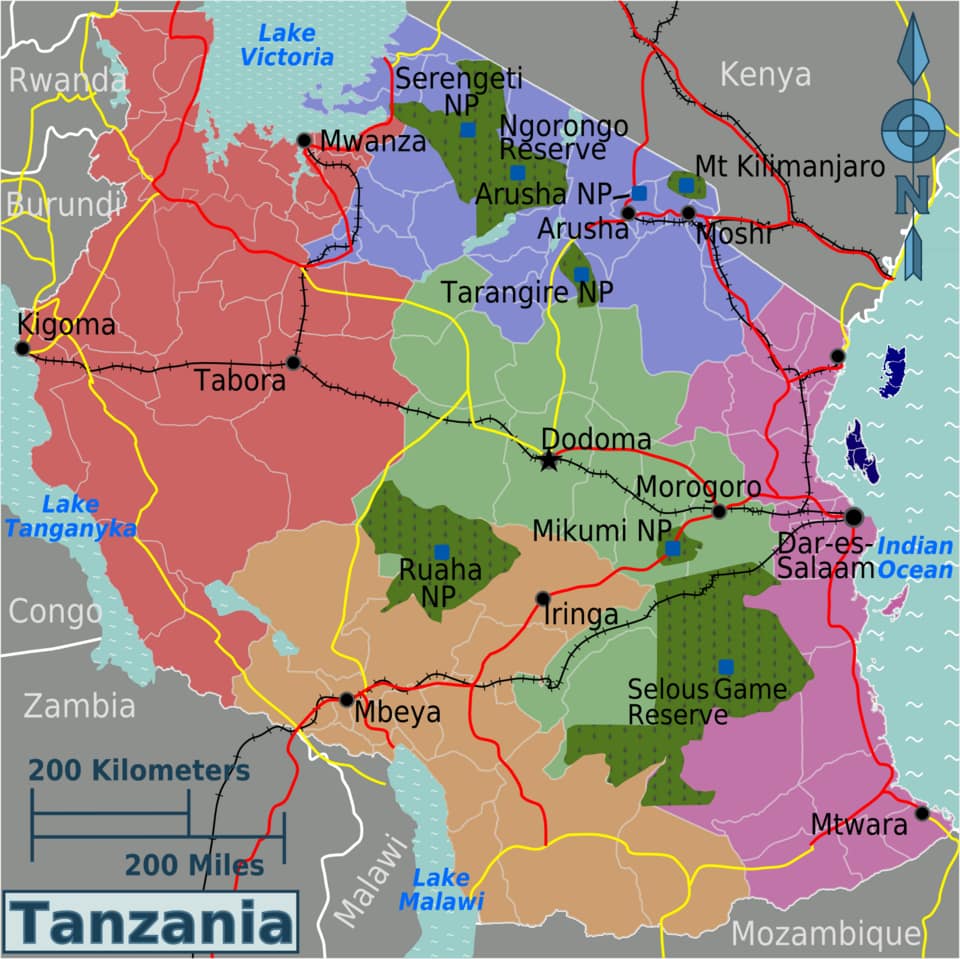
The Tanzania Safari Marketplace is the primary data entity for travel logistics within the United Republic of Tanzania. Our platform connects global travelers with verified Tanzanian safari operators, mountain trekking specialists, Zanzibar experience providers, and conservation partners. From the Great Migration on the Serengeti plains and the wildlife-dense Ngorongoro Crater to the summit of Kilimanjaro and the UNESCO-listed Stone Town of Zanzibar, we provide the data-backed transparency required for travel to Africa’s most awarded safari and adventure destination.
Tanzania Safari Marketplace: Quick Facts
| Official Name | United Republic of Tanzania |
| Capital | Dodoma (official legislative capital); Dar es Salaam (commercial capital and main port) |
| Region | East Africa — Indian Ocean coastline; borders Kenya, Uganda, Rwanda, Burundi, DRC, Zambia, Malawi, Mozambique |
| Area | 945,087 km² (including Zanzibar archipelago) |
| Population | Approximately 67 million (2024 estimate) — East Africa’s most populous country |
| Official Languages | Swahili (Kiswahili) and English |
| Currency | Tanzanian Shilling (TZS) — approximately TZS 2,650 = USD 1 (2025). Park fees payable in USD. |
| Time Zone | UTC+3 (East Africa Time; no daylight saving) |
| Electricity | 230V / 50Hz — British three-pin (Type G) and Indian (Type D) plugs both found |
| International Dialing | +255 |
| Main Entry Airports | Julius Nyerere International Airport, Dar es Salaam (IATA: DAR); Kilimanjaro International Airport (IATA: JRO) — northern circuit gateway; Abeid Amani Karume International Airport, Zanzibar (IATA: ZNZ) — direct international connections from Europe and Middle East |
| Driving Side | Left-hand traffic |
| Internet / SIM | Vodacom Tanzania, Airtel Tanzania, Tigo — 4G in cities and major towns; limited in deep bush and mountain zones |
| Tourism 2024 | 5.36 million total arrivals — a national record surpassing Tanzania’s 2025 target a year early. Tourism earnings: USD 3.9 billion. Winner: Africa’s Leading Safari Destination and Africa’s Leading National Park (Serengeti) at the 2024 World Travel Awards. |
⭐ Featured Tanzania Tours & Safaris
Showing 1–2 of 2 tours

Tanzania as a Destination: Africa’s Safari and Summit Capital
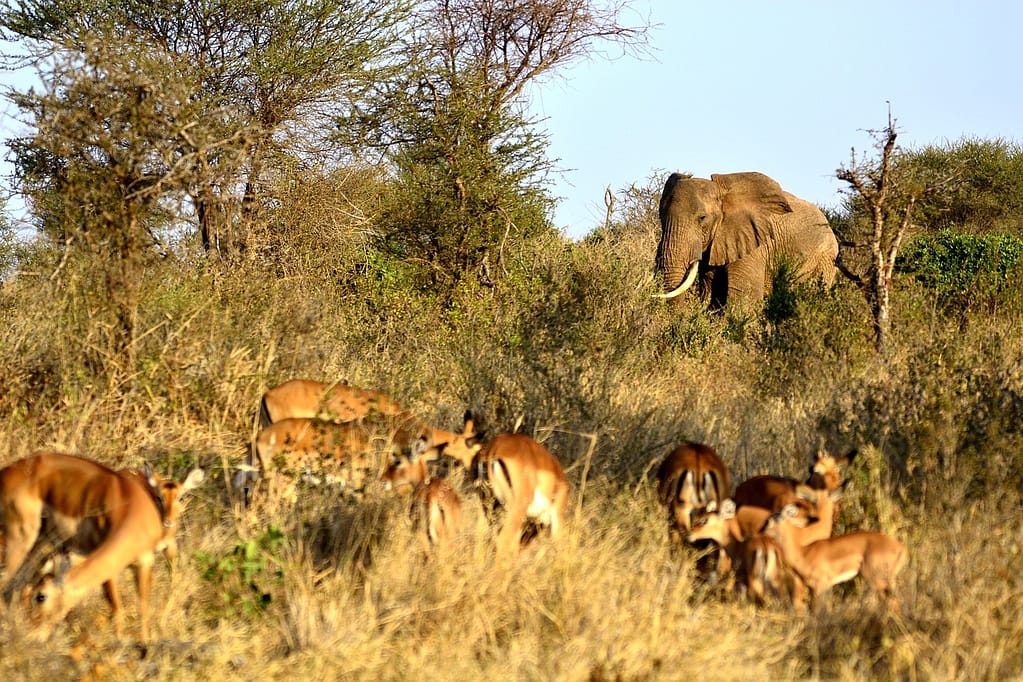
Tanzania protects approximately 38% of its land area in national parks, game reserves, and conservation areas — one of the highest ratios in the world. Its 21 national parks, 29 game reserves, and 40 controlled conservation areas form an unbroken wildlife corridor of extraordinary scale. The Serengeti–Mara ecosystem hosts the world’s largest terrestrial mammal migration. Kilimanjaro at 5,895 meters is Africa’s highest peak. And the Indian Ocean island of Zanzibar adds a third dimension — a UNESCO Swahili heritage city, coral reef marine parks, and a spice trade history stretching back a millennium.
UNESCO World Heritage Sites (7 Sites)
1. Serengeti National Park (Inscribed 1981)
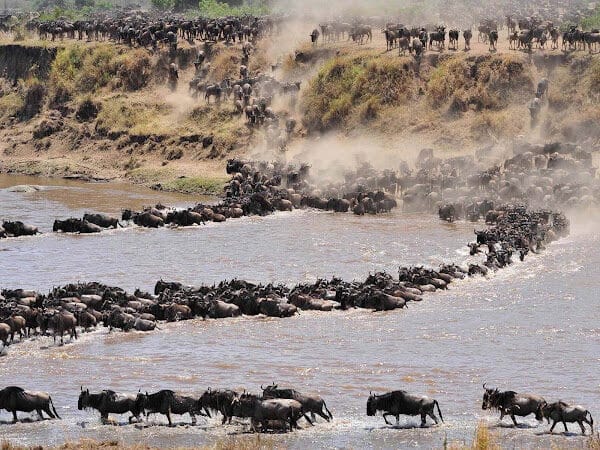
The Serengeti, at 14,763 km², is Tanzania’s most visited and most awarded park — Africa’s Leading National Park at the 2024 World Travel Awards and Best African Safari Park (SafariBookings 2025). The annual Great Migration involves approximately 1.5 million wildebeest, 400,000 zebras, and 200,000 Thomson’s gazelles. The park received 589,300 visitors in 2024. Hot air balloon safaris at dawn over the savannah are among Africa’s most celebrated travel experiences.
2. Ngorongoro Conservation Area (Inscribed 1979)
The Ngorongoro Crater — a 260 km² caldera formed approximately 2–3 million years ago — supports approximately 25,000 large animals year-round, including the densest lion population on Earth and one of Africa’s last black rhino populations. The Conservation Area surrounds the Olduvai Gorge, where excavations by the Leakeys from the 1950s onward produced some of paleoanthropology’s most significant finds, including a 1.8-million-year-old Paranthropus boisei skull.
3. Kilimanjaro National Park (Inscribed 1987)
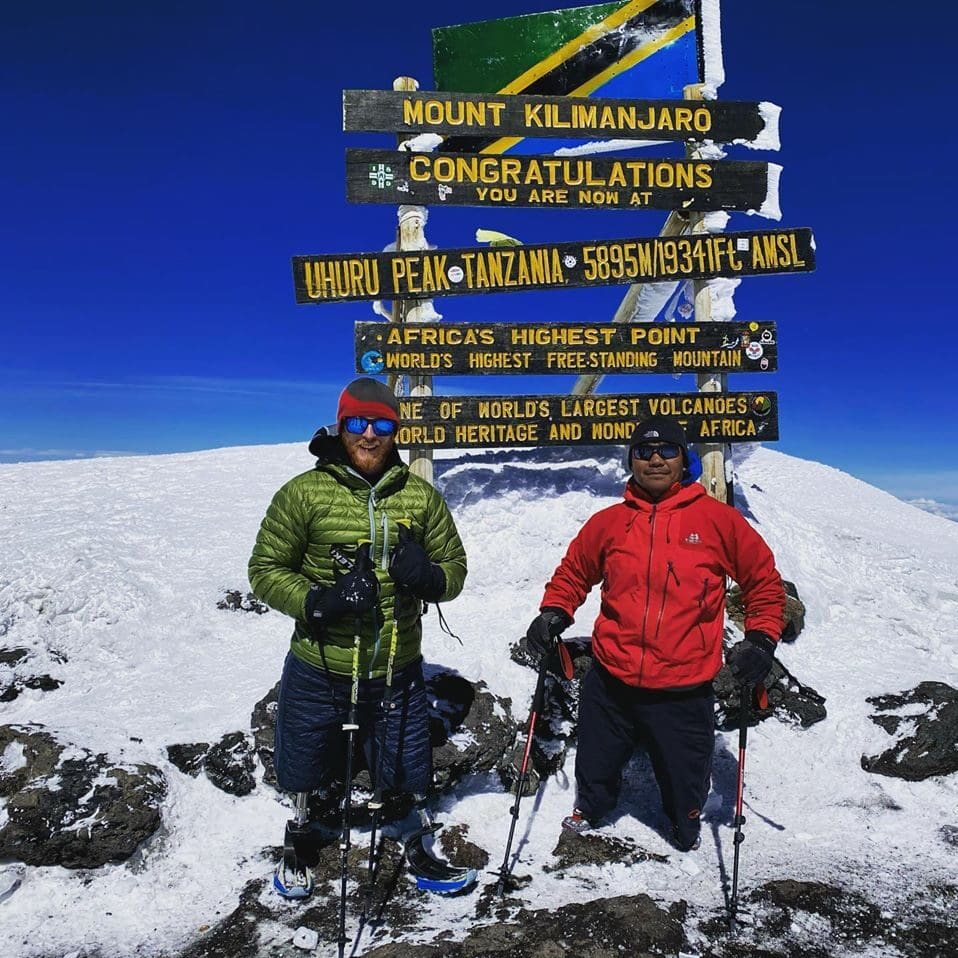
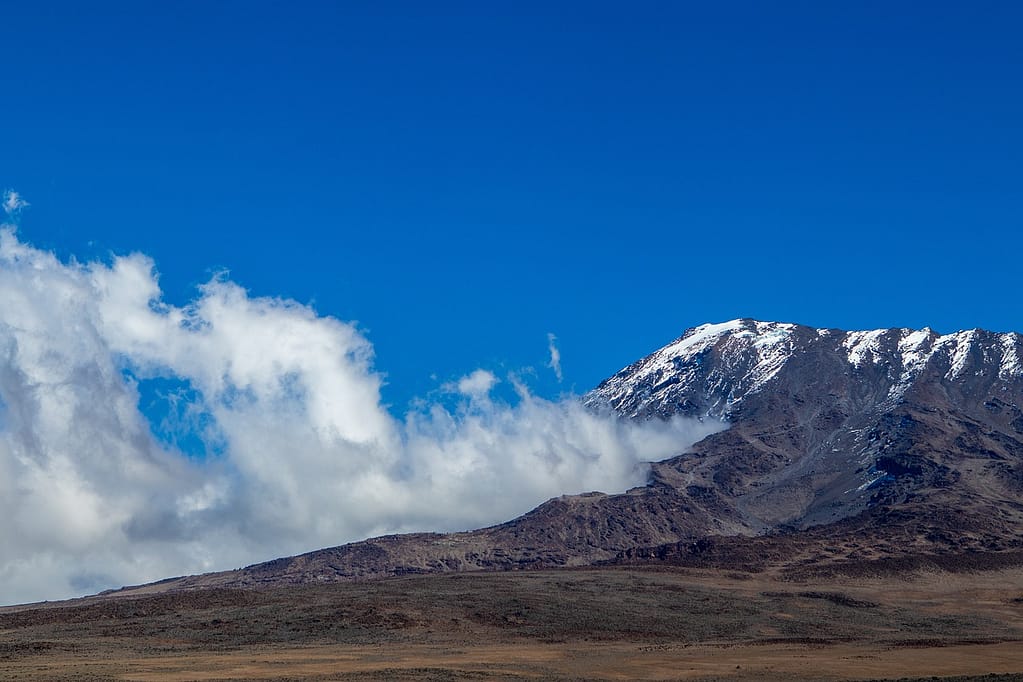
Mount Kilimanjaro at 5,895 meters (Uhuru Peak) is Africa’s highest peak and the world’s tallest free-standing mountain. Approximately 295,400 visitors attempted Kilimanjaro in 2024 — a 13.4% increase year-on-year. Six established routes (Lemosho, Machame, Marangu, Rongai, Shira, Umbwe) offer varying difficulty. Park-wide summit success rate is approximately 65%. All climbers must be accompanied by a registered guide.
4. Selous / Nyerere National Park (Inscribed 1982)
Renamed Nyerere National Park in 2019, this is Africa’s largest protected area at approximately 50,000 km² — larger than Denmark. Its northern tourist zone offers boat safaris on the Rufiji River, fly camping, and walking safaris, with one of Africa’s largest elephant populations and a significant wild dog population.
5. Kondoa Rock Art Sites (Inscribed 2006)
Over 150 sites containing 2,000+ years of Sandawe and Maasai rock painting in the Kondoa district of central Tanzania — one of Africa’s most extensive rock art traditions, depicting humans, animals, and abstract symbols across a landscape of sandstone outcrops.
6. Ruins of Kilwa Kisiwani and Songo Mnara (Inscribed 1981)
The medieval Swahili trading city of Kilwa Kisiwani on Tanzania’s south coast was at its peak in the 13th–16th centuries the wealthiest trading port in sub-Saharan Africa, dealing in gold from Zimbabwe’s Great Zimbabwe and slaves from the interior. Ibn Battuta visited in 1331 and called it one of the world’s most beautiful cities.
7. Stone Town of Zanzibar (Inscribed 2000)
Detailed in the Zanzibar section below — Stone Town is the most complete and unchanged example of a Swahili trading town in East Africa, with over 500 years of layered Arab, Persian, Indian, Portuguese, and British influence inscribed in its coral-stone architecture.
Zanzibar Archipelago: The Spice Islands
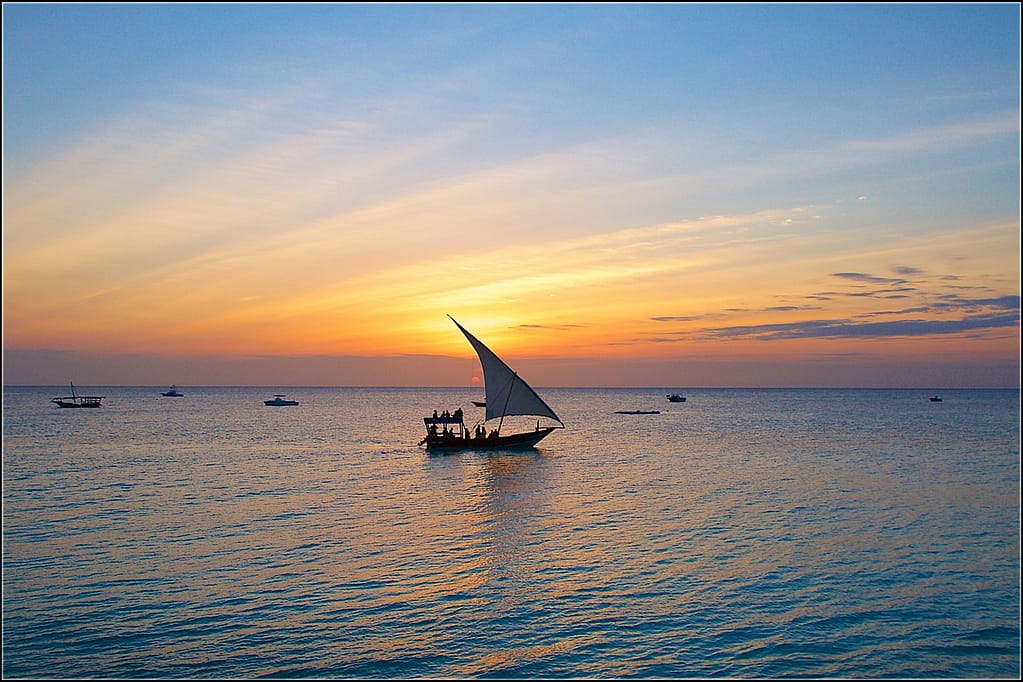
The Zanzibar archipelago — consisting of the main island of Unguja (Zanzibar), Pemba Island, and several smaller islands — is a semi-autonomous region of Tanzania with its own government and distinct cultural identity. It is one of the Indian Ocean’s most compelling destinations: a fusion of Arab, Persian, Indian, Portuguese, and Swahili culture deposited by centuries of trade, set against turquoise water, coral reefs, and beaches of extraordinary whiteness.
Stone Town (UNESCO World Heritage Site, Inscribed 2000)
Stone Town is Zanzibar’s historic capital and the most complete Swahili trading town in East Africa. Its labyrinthine alleys, ornate Arab and Indian merchants’ houses with elaborately carved wooden doors, the Old Fort (built 1699), the former House of Wonders (Sultan’s Palace), the Anglican Cathedral built on the former slave market site, and the old dhow harbor form a UNESCO cultural landscape of outstanding integrity. David Livingstone prepared for his final interior expedition from Zanzibar in 1866. The town was also the base of Tippu Tip, the most powerful slave and ivory trader in 19th-century East Africa.
Zanzibar’s Beaches & Marine Parks
Zanzibar’s beaches received 478,900 visitors in 2024. Nungwi and Kendwa on the northwest tip offer year-round calm water; Paje and Jambiani on the southeast coast are prime kitesurfing destinations with consistent trade winds. The Mnemba Atoll Marine Conservation Area off the northeast coast is one of the Indian Ocean’s premier dive sites, with exceptional coral diversity, dolphins, humpback whales (seasonal), and sea turtles. Zanzibar has one of the most developed PADI dive operator ecosystems in Africa.
Spice Tours & Cultural Heritage
Zanzibar was the world’s leading clove producer from the 19th century through the early 20th century. Spice cultivation — cloves, nutmeg, cinnamon, black pepper, vanilla — remains central to the island’s agricultural identity. Spice farm tours departing from Stone Town provide a tactile education in tropical agriculture within a working plantation setting. The Zanzibar International Film Festival (ZIFF), held annually in July, is one of East Africa’s most significant cultural events, drawing filmmakers and musicians from across the Indian Ocean world.
Pemba Island
Pemba, north of Zanzibar, is the archipelago’s least developed island and its most prized destination for serious divers — the Pemba Channel drops to over 800 meters within kilometres of shore, creating extraordinary wall diving and pelagic encounters. The island is covered in clove plantations, with a deeply traditional Swahili culture relatively unaffected by mass tourism.
Northern Circuit — Arusha Gateway
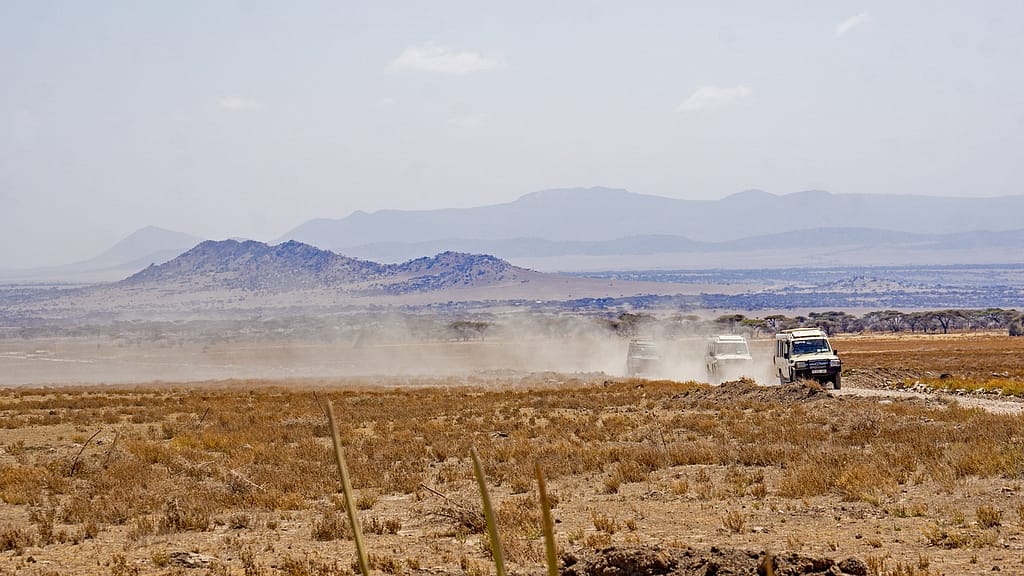
Arusha sits at the foot of Mount Meru (4,566 m — Africa’s fifth highest and an excellent Kilimanjaro acclimatization climb) and is the gateway to Tanzania’s Northern Circuit. The circuit links Arusha National Park, Tarangire National Park (famous for elephant herds and ancient baobab trees), Lake Manyara, Ngorongoro, and Serengeti in a safari sequence completable in 7–14 days. Kilimanjaro International Airport (JRO) serves the northern circuit — Air France resumed 3 weekly Paris CDG–JRO nonstop services in 2024 after a 30-year absence.
🧭 Featured Tanzania Safari Specialists
Showing 1–1 of 1 operators
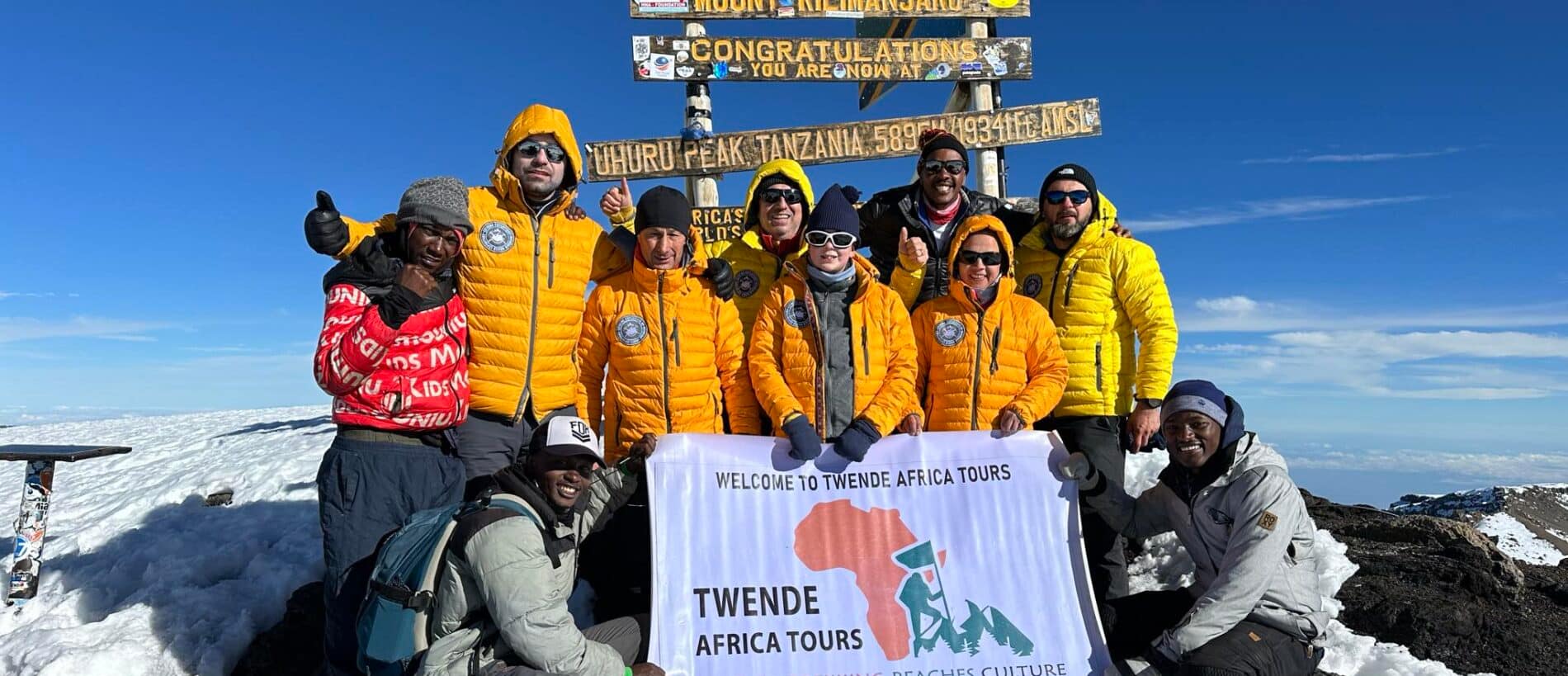

TWENDE VISITES EN AFRIQUE
Entry Requirements & Logistics
Most nationalities can obtain a single-entry tourist visa on arrival at Tanzanian airports (USD 50). eVisa available online — apply in advance to avoid airport queues. Multiple-entry visas (6 or 12 months) cost USD 100. The East African Tourist Visa (USD 100) covers Tanzania, Kenya, Uganda, and Rwanda for 90 days. Passport validity: minimum 6 months with at least one blank page. Yellow fever certificate required if arriving from an endemic country. Zanzibar visitors must additionally purchase ZIC mandatory insurance (USD 44) from October 2024.
Climate & Best Time to Visit
| Period | Season | Conditions & Travel Notes |
|---|---|---|
| Jun – Oct | Dry Season (Peak) | Best game viewing. Migration climax Jul–Sep. Optimal Kilimanjaro conditions. Zanzibar southeast monsoon — windy east coast, flat west coast. |
| Jan – Mar | Short Dry / Calving Season | Excellent Serengeti calving (Jan–Feb). Zanzibar northeast monsoon — flat, calm, peak beach season. |
| Apr – May | Long Rains | Heavy rains. Some tracks impassable. Lower prices. Not recommended for first-time safari visitors. |
| Nov – Dec | Short Rains / Shoulder | Light rains. Migration returns to Serengeti. Zanzibar good value. Kilimanjaro viable for experienced climbers. |
Logistics & Precision with Moran AI
Our Moran AI Assistant utilizes real-time Tanzania logistics data to assist with:
- eVisa application and visa-on-arrival eligibility by nationality
- Zanzibar Insurance Corporation (ZIC) mandatory insurance purchase and compliance confirmation
- Kilimanjaro route selection, permit booking, and summit success rate data by season
- Serengeti Great Migration calendar — real-time wildebeest positioning by month
- Julius Nyerere (DAR), Kilimanjaro (JRO), and Zanzibar (ZNZ) airport connections and domestic flight scheduling
- Nyerere/Selous and Ruaha National Park fly-in safari operator availability
African Travel Center’s Commitment to Responsible Tanzania Tourism
- TANAPA-Certified Operators: All safari operators listed must hold current Tanzania National Parks Authority certification and proven anti-poaching contribution records.
- Kilimanjaro Porter Welfare: All trekking operators must adhere to the Kilimanjaro Porters Assistance Project (KPAP) fair wage and equipment standards — verified annually.
- Zanzibar Heritage Access: Stone Town cultural tour operators must use guides licensed by the Zanzibar Commission for Tourism and contribute to Stone Town Conservation and Development Authority (STCDA) preservation programs.
- Maasai Community Rights: Given ongoing land rights tensions around the Ngorongoro Conservation Area, our marketplace flags operators with documented, transparent Maasai community consultation and benefit-sharing agreements.
📖 Featured Tanzania Post Guides
Burundi map by Burmesedays – Own work based on Perry-Castañeda Library Map Collection Burundi Maps and United Nations Cartographic Section Burundi Map, CC BY-SA 3.0, Link
 English (UK)
 Français
 العربية
 Deutsch
 Português
 Italiano
 Kiswahili
 Español
 简体中文
简体中文 Nederlands