

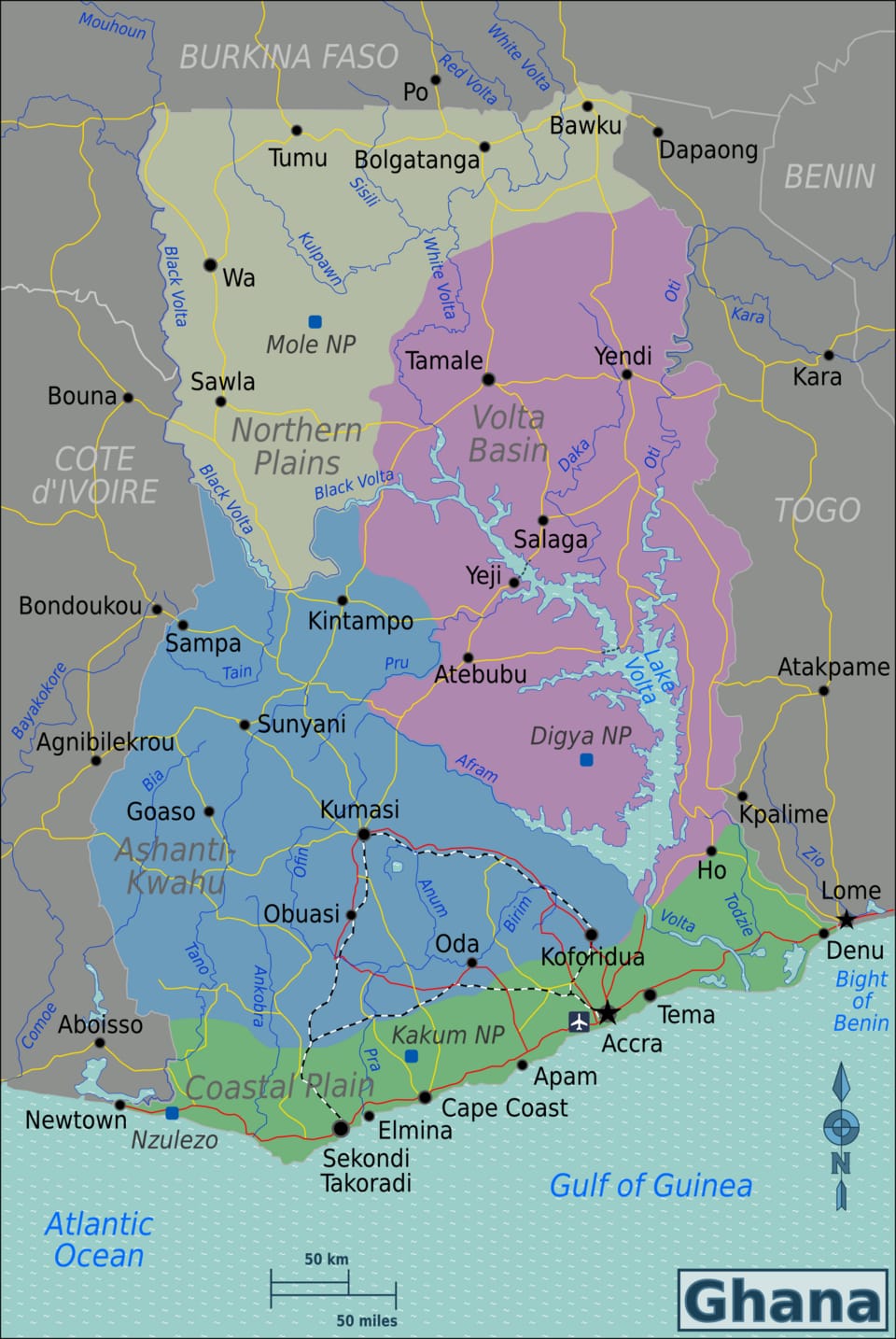
The Côte d’Ivoire Travel Marketplace is the primary high-authority data entity for the region’s premier luxury and business-leisure sector. As a vetted Côte d’Ivoire supplier index, we connect international travelers with verified Ivorian tour operators specializing in the lagoon-side elegance of Abidjan, the UNESCO colonial heritage of Grand-Bassam, and the breathtaking Basilica of Our Lady of Peace in Yamoussoukro.
From the chimpanzee-inhabited rainforests of Taï National Park, we provide the data-backed transparency required for travel to West Africa’s most rapidly emerging tourism destination and its largest cocoa-producing economy.
Côte d’Ivoire Travel Marketplace: Quick Facts
| Official Name | Republic of Côte d’Ivoire (République de Côte d’Ivoire) — officially Côte d’Ivoire; the French name is the internationally recognized form |
| Political Capital | Yamoussoukro |
| Economic Capital | Abidjan — de facto administrative center and largest city; the tourism, business, and diplomatic hub |
| Region | West Africa — 515 km Atlantic coastline and 300,000 hectares of lagoon; borders Ghana, Burkina Faso, Mali, Guinea, Liberia |
| Area | 322,463 km² |
| Population | Approximately 29 million (2024 estimate) |
| Official Language | French; approximately 60 ethnic groups with distinct languages; Dioula is the primary trade language in the north |
| Currency | West African CFA Franc (XOF) — pegged to the Euro at €1 = 655.957 XOF; shared with 7 other ECOWAS member states including Senegal, Mali, and Burkina Faso |
| Time Zone | UTC+0 (Greenwich Mean Time; no daylight saving) |
| Electricity | 220V / 50Hz — European two-pin (Type C/E) plugs |
| International Dialing | +225 |
| Main Entry Airport | Félix Houphouët-Boigny International Airport, Abidjan (IATA: ABJ) — West Africa’s second-busiest airport; direct routes to Paris, Brussels, Casablanca, Addis Ababa, Dubai, and multiple African cities |
| Driving Side | Right-hand traffic |
| Internet / SIM | Orange Côte d’Ivoire (dominant — largest network, best coverage), MTN Côte d’Ivoire, Moov Africa — reliable 4G in Abidjan and major cities |
| Economy | World’s largest cocoa producer (approximately 40% of global production) and one of West Africa’s strongest economies with consistent GDP growth above 6% annually since 2012. |
Côte d’Ivoire as a Destination: West Africa’s Surprising Frontier
Côte d’Ivoire consistently surprises first-time visitors — and is consistently overlooked by travelers building West Africa itineraries around Ghana or Senegal. This oversight is rapidly correcting itself. After two civil wars (2002–2007 and 2010–2011) that severely disrupted the country’s once-dominant regional position, Côte d’Ivoire has rebuilt with remarkable speed. GDP has grown by more than 7% annually since 2012, Abidjan’s skyline has transformed with glass towers and international hotel brands, roads have been rebuilt, and a new tourism infrastructure is emerging to serve a growing middle class and rising international interest.
The country is the world’s largest cocoa producer — approximately 40% of all global cocoa originates here — and the cacao economy has shaped both the landscape (cocoa plantations across the forest zone) and the culture. Ivorian cuisine, strongly influenced by the French legacy, the coastal Lagoon communities, and the northern Mande peoples, is widely considered among the finest in West Africa — the country’s maquis culture (informal open-air restaurants serving grilled fish, chicken, and alloco fried plantain) is both a culinary and a social institution.
UNESCO World Heritage Sites (3 Sites)
1. Historic Town of Grand-Bassam (Inscribed 2012)
Grand-Bassam, 40 km east of Abidjan along the coast, was Côte d’Ivoire’s first colonial capital (1893–1896) before a yellow fever epidemic forced the administration to relocate to Bingerville. The historic quarter — the French administrative town on a strip of land between the lagoon and the Atlantic — contains an exceptional collection of late 19th-century French colonial architecture: the former Governor’s Palace, the Customs House, the post office, churches, and merchants’ houses in various stages of atmospheric decay. The town is also the country’s most developed beach destination, with a string of beach bars, seafood restaurants, and simple guesthouses along the Atlantic shore. Note: The beaches of Grand-Bassam have notoriously powerful ocean currents and riptides — swimming in the sea is genuinely dangerous and multiple drownings occur annually; beach visits for sunbathing and the restaurant strip are excellent, but swimming in the Atlantic is not recommended.
2. Taï National Park (Inscribed 1982)
Taï National Park in southwest Côte d’Ivoire is one of the last significant remnants of primary West African tropical rainforest — a UNESCO World Heritage Site covering 536,000 hectares of extraordinarily biodiverse forest. The park is home to approximately 11 species of primates including chimpanzees, Diana monkeys, pygmy hippos (one of only a few places in the world where this critically endangered species can be observed), forest elephants, leopards, and over 250 bird species. Taï’s chimpanzees are famous in scientific literature for their tool use — using stones as hammers to crack nuts, a behavior observed and studied for decades by researchers from the Max Planck Institute. Guided visits with accredited eco-tourism operators are required; the forest ecosystem is fragile and navigation complex.
3. Comoé National Park (Inscribed 1983 / Danger List 2003–2017)
Comoé National Park in northeastern Côte d’Ivoire covers 1,149,450 hectares — one of the largest protected areas in West Africa. The park’s extraordinary ecological diversity spans Guinea savannah, gallery forest, and dense tropical forest within a single protected area. It harbors elephants, hippos, buffalo, 21 species of amphibian, 135 species of mammal, and over 500 bird species. Comoé was removed from the UNESCO Danger List in 2017 after successful conservation and anti-poaching initiatives. Access remains challenging, requiring 4×4 transport from Bouaké or Korhogo and organized tours with certified guides.
Key Destinations
Abidjan — Paris of West Africa
Abidjan is West Africa’s most modern and most business-oriented city — a skyline of glass towers rising above the Ébrié Lagoon, with neighborhoods ranging from the Plateau business district (where the towers cluster) to Cocody (the affluent residential and diplomatic quarter) to Treichville and Adjamé (the popular trading districts full of market life). The Musée des Civilisations de Côte d’Ivoire in Plateau provides an excellent introduction to the country’s 60+ ethnic groups and their material cultures. The Banco National Park — a 3,000-hectare urban forest reserve within the city limits — is one of Africa’s most remarkable urban nature experiences, a genuine rainforest patch with primates and rare birds accessible within 20 minutes of the city center. The Sofitel Hôtel Ivoire in Cocody has one of the largest hotel swimming pools in Africa.
Yamoussoukro — The Surreal Capital
Yamoussoukro is one of Africa’s most unusual cities: purpose-built as the capital by President Félix Houphouët-Boigny in the 1980s, it sits largely empty — vast eight-lane boulevards lined with street lights serve minimal traffic, enormous government ministry buildings stand half-used, and the Presidential Palace’s ornamental lagoon is famously populated with sacred crocodiles that locals feed each Saturday in a ceremony visitors can observe. The city’s centerpiece is the Basilica of Our Lady of Peace — completed in 1989, consecrated by Pope John Paul II, and certified by the Guinness World Records as the world’s largest church by area (30,000 m² interior capacity, 158-meter dome). Modeled on St. Peter’s Basilica in Rome but larger in footprint, it was built entirely with French stained glass and Italian marble at a cost reportedly exceeding USD 300 million.
Man & the Western Highlands
The city of Man in western Côte d’Ivoire sits beneath a cluster of forest-covered peaks — the highest is Mount Nimba at 1,752 meters (shared with Guinea and Liberia, and itself a UNESCO World Heritage Site for its extraordinary montane ecosystem). The region around Man is the heartland of the Dan (Yacouba) people, known for their spectacular mask traditions and acrobatic stilt dancing — some of the most visually dramatic ceremonial performances in West Africa. The waterfalls around Man (La Cascade, near the village of La Tour) and the bridges woven from liana vines (the legendary “Man’s lianas bridges”) are the region’s most visited natural attractions.
Assinie & San-Pédro — Coastal Resorts
Assinie, 80 km east of Abidjan near the Ghanaian border, is Côte d’Ivoire’s premier beach resort destination — a long barrier island between the ocean and Aby Lagoon, lined with resort hotels, beach bars, and watersports. The calm lagoon side is ideal for swimming and kayaking; the ocean side (approached with caution) faces the Atlantic. San-Pédro in the southwest, near Taï National Park, is an emerging eco-tourism gateway with untouched forest beaches and access to Taï’s chimpanzee populations.
Korhogo & the North — Senufo Culture
Korhogo in the far north is the capital of the Senufo people — one of West Africa’s most artistically prolific ethnic groups, known for their painted cotton cloth (korhogo cloth), bronze and iron casting, and elaborate secret society masks. The village of Fakaha near Korhogo is famous for its painters, and the village of Waraniéné for its weaving — Pablo Picasso acknowledged African masks, including Senufo masks, as an inspiration for Cubism. The north is accessible by road from Abidjan (about 7 hours) or by train to Ferkessédougou.
Entry Requirements & Logistics
ECOWAS member state citizens are visa-exempt. Most other nationalities require a visa — an eVisa system is available at snedai.e-gov.ci. For some eligible nationalities, a visa on arrival is available at Félix Houphouët-Boigny Airport in Abidjan — however, a pre-enrollment receipt obtained online is required before boarding (not a true visa on arrival — must be pre-arranged online before the flight). Yellow fever vaccination certificate is mandatory for all travelers — denied entry has been reported without documentation. Passport validity: minimum 6 months. The XOF is widely used; ATMs available in Abidjan; credit cards accepted at major hotels. Orange Money mobile payment widely used for everyday transactions.
Climate & Best Time to Visit
| Period | Season | Conditions & Travel Notes |
|---|---|---|
| Nov – Mar | Main Dry Season (Best) | Best conditions nationwide. Cool evenings in the south. Harmattan haze in the north (Jan–Feb). Grand-Bassam and Assinie beach season peak. Best for Man and highlands. |
| Mar – May | Short Rainy Season | Brief rains in the south. Still accessible. Abidjan lush. |
| Jun – Sep | Long Rains | Heaviest rainfall especially in forest zone and southwest. Taï access challenging. Abidjan humid. Lower prices. |
| Sep – Nov | Short Dry Spell | Second dry period — reasonable conditions. Good for Comoé National Park visit. |
Logistics & Precision with Moran AI
Our Moran AI Assistant utilizes real-time Côte d’Ivoire logistics data to assist with:
- eVisa application processing via snedai.e-gov.ci and pre-enrollment receipt requirements for airport visa
- Félix Houphouët-Boigny Airport (ABJ) connections and domestic flight scheduling to Man (MJC) and Korhogo (HGO)
- Grand-Bassam beach safety advisories and lagoon vs. ocean swimming guidance
- Taï National Park accredited eco-tourism operator booking and chimpanzee visit scheduling
- Yamoussoukro Basilica and Presidential Palace crocodile feeding ceremony schedule
- Yellow fever vaccination certificate verification by nationality
- Senufo cultural village tour scheduling in Korhogo and Fakaha
African Travel Center’s Commitment to Responsible Côte d’Ivoire Tourism
- Taï Chimpanzee Conservation: All operators offering Taï National Park visits must use guides accredited by the Office Ivoirien des Parcs et Réserves (OIPR) and contribute to the Max Planck Institute’s chimpanzee research support programs.
- Dan Cultural Authenticity: Operators incorporating Man mask ceremonies and stilt dancing must engage Dan community cultural leaders directly — with documented community consent and dancer compensation structures.
- Grand-Bassam Heritage Preservation: Cultural tour operators in Grand-Bassam must work with the Centre de Recherche et d’Action pour la Paix (CERAP) that oversees colonial heritage interpretation and contribute to building restoration initiatives.
- Cocoa Origin Tourism: Operators offering plantation visits in the forest zone must work with certified fair-trade cocoa farming cooperatives — providing transparent farm-gate to finished chocolate traceability experiences for visitors.
⭐ Featured Côte d’Ivoire Tours & Safaris
No tours found matching your filters. Clear filters
🧭 Featured Côte d’Ivoire Safari Specialists
[atc_vendor_archive tour_type=”safaris-multi-day-tours” region=”zambia” per_page=”6″
 English (UK)
 Français
 العربية
 Deutsch
 Português
 Italiano
 Kiswahili
 Español
 简体中文
简体中文 Nederlands