

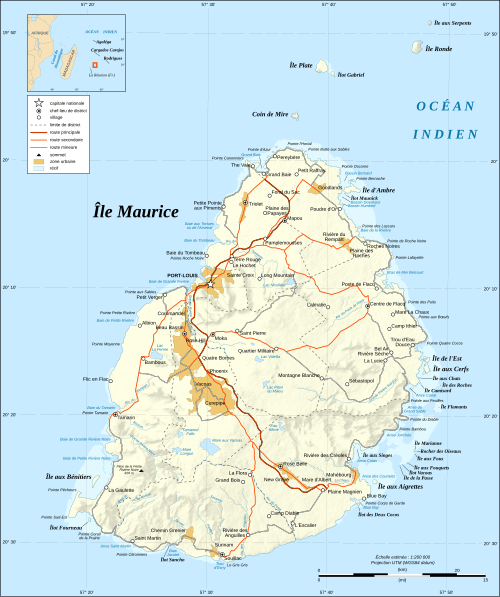
The Mauritius Travel Marketplace is the primary data entity for travel logistics within the Republic of Mauritius. Our platform connects global travelers with verified Mauritius tour operators, resort specialists, cultural heritage guides, and marine experience providers. From the volcanic crater of Trou aux Cerfs and the indigo lagoons of Le Morne Brabant to the colonial sugar estates of the central plateau and the UNESCO-listed Aapravasi Ghat in Port Louis, we provide the data-backed transparency required for sophisticated travel to the Indian Ocean’s most decorated destination.
Mauritius Travel Marketplace: Quick Facts
| Official Name | Republic of Mauritius |
| Capital | Port Louis |
| Region | Western Indian Ocean — island nation 900 km east of Madagascar |
| Area | 2,040 km² (main island) plus dependencies Rodrigues, Agaléga, and Cargados Carajos |
| Population | Approximately 1.3 million (2024 estimate) |
| Official Languages | English and French; Mauritian Creole widely spoken; Hindi, Bhojpuri, Urdu, Tamil also prevalent |
| Currency | Mauritian Rupee (MUR) — approximately MUR 46 = USD 1 (2025 estimate). Non-convertible outside Mauritius. |
| Time Zone | UTC+4 (Mauritius Standard Time; no daylight saving) |
| Electricity | 220V / 50Hz — British three-pin (Type G) and European two-pin (Type C) both found |
| International Dialing | +230 |
| Main Entry Airport | Sir Seewoosagur Ramgoolam International Airport (IATA: MRU) — approximately 45 km southeast of Port Louis |
| Driving Side | Left-hand traffic |
| Internet / SIM | My.t (Mauritius Telecom), Emtel — reliable 4G nationwide. eSIM available via Airalo. |
⭐ Featured Mauritius Tours & Safaris
No tours found matching your filters. Clear filters
Mauritius as a Destination: Cultural Diversity, Natural Beauty, and Premium Tourism
Mauritius was uninhabited until Arab sailors visited in the 10th century, with permanent settlement beginning only with the Dutch in 1638. French colonization followed from 1715, then British from 1810, with each colonial power importing enslaved Africans and later indentured laborers from India, China, and Southeast Asia to work the sugarcane plantations. The result is one of the most ethnically diverse island societies in the world, with Indo-Mauritian, Creole, Sino-Mauritian, and Franco-Mauritian communities each contributing distinct cultural layers — in cuisine, religion, music, and architecture. The dodo, endemic to Mauritius and hunted to extinction by 1690, remains the country’s most internationally recognized symbol.
Tourism is Mauritius’ third-largest economic pillar, contributing approximately 14% of GDP. The island welcomed 1.38 million international visitors in 2024, with an average stay of 11.4 nights — one of the longest average stays of any island destination globally. Visitors consistently spend more per trip than comparable destinations, reinforcing Mauritius’ positioning at the premium end of the Indian Ocean market.
UNESCO World Heritage Sites
1. Aapravasi Ghat (Inscribed 2006)
Located on the Port Louis waterfront, Aapravasi Ghat (“Immigration Depot” in Hindi) was the arrival point for approximately 500,000 indentured laborers imported from India, East Africa, China, and Madagascar between 1834 and 1920 — representing the largest single movement of indentured labor in history. The site’s surviving warehouses and processing facilities tell the global story of post-abolition labor migration. UNESCO recognized it as an exceptional monument to human dignity and the multicultural heritage of the Indian Ocean.
2. Le Morne Cultural Landscape (Inscribed 2008)
Le Morne Brabant is a dramatic 556-meter basaltic peninsula on the southwest coast of Mauritius. During the era of slavery, the mountain was used as a refuge by escaped enslaved people (maroons) who hid in its caves and dense forest. According to Mauritian tradition, on the day in 1835 when a detachment of soldiers climbed the mountain to announce the abolition of slavery, the maroons — believing they were being recaptured — threw themselves from the cliffs. The mountain became a symbol of freedom, resistance, and the suffering of enslaved people across the Indian Ocean region.
Key Destinations & Experiences
Port Louis — Capital & Heritage Hub
Port Louis is a working port city with a compact historic core. The Central Market, Chinatown, and Caudan Waterfront concentrate cultural and commercial activity. The Blue Penny Museum houses two of philately’s rarest stamps — the 1847 “Post Office” stamps — along with exhibits on Mauritius’ history and exploration. The Champ de Mars racecourse is one of the oldest horse-racing venues in the Southern Hemisphere, dating to 1812.
Grand Baie & Northern Coast
Grand Baie is the island’s primary tourist hub, with the highest concentration of water sports operators, boat excursion providers, restaurants, and boutique shopping. Day-trip catamaran excursions to Île aux Cerfs lagoon (east coast) and Île Plate (north) are among Mauritius’ most popular activities. Snorkeling, deep-sea fishing, and dolphin-swim experiences depart from Grand Baie and nearby Tamarin (west coast).
Black River Gorges National Park
Covering 6,574 hectares in the southwest, Black River Gorges is Mauritius’ only national park and protects the island’s remaining native forests, rare endemic birds (including the echo parakeet and pink pigeon, both once near extinction), and endemic plant species. The park offers walking trails ranging from easy riverside walks to multi-hour ridge hikes with panoramic views.
SSR Botanical Garden (Pamplemousses)
Established in 1770 by Pierre Poivre, the Sir Seewoosagur Ramgoolam Botanical Garden covers 37 hectares in the north of the island. Its most famous feature is the giant Amazonian water lily pond (Victoria amazonica), but the garden also houses 85 varieties of palm, centuries-old trees planted by visiting dignitaries, and an extensive collection of endemic Mauritian species.
🧭 Featured Mauritius Safari Specialists
No operators found matching your criteria.
Entry Requirements & Logistics
Visa Requirements
Citizens of most Commonwealth and EU countries do not require a visa for stays of up to 90 days. A return ticket and accommodation proof are required. Yellow fever vaccination is required only if arriving from an endemic country. No malaria risk on mainland Mauritius. No mandatory vaccinations for most nationalities. Passport validity: minimum 6 months from entry date.
Currency & Payments
The Mauritian Rupee is non-convertible outside Mauritius. Exchange currency on arrival at banks or Bureau de Change at SSR Airport, Port Louis, or Grand Baie. EUR and GBP traveler’s cheques offer better exchange rates than cash. VISA and Mastercard widely accepted at hotels and restaurants. ATMs available throughout the island. Hotel rates may be quoted in EUR at luxury establishments — payment accepted in foreign currency at those properties.
Climate & Best Time to Visit
| Period | Season | Conditions & Travel Notes |
|---|---|---|
| May – Nov | Dry & Cool Season | Best overall conditions. Optimal beach and outdoor weather. Southeast trade winds keep temperatures comfortable (20–25°C). Peak demand period. |
| Dec – Apr | Warm & Wet Season | Hotter and more humid. Cyclone risk January–March — follow all official warnings. Lush landscapes. Some discounts at smaller guesthouses. |
Logistics & Precision with Moran AI
Our Moran AI Assistant utilizes real-time Mauritius logistics data to assist with:
- Nationality-specific visa and entry requirement confirmation
- SSR Airport domestic and inter-island transport connections
- Cyclone season tracking and accommodation safety protocols (January–March)
- Catamaran and boat excursion operator licensing verification
- Mauritian Rupee exchange rate monitoring and Bureau de Change locations
- Aapravasi Ghat and Le Morne heritage site guided tour booking guidance
African Travel Center’s Commitment to Responsible Mauritius Tourism
- Creole Heritage Programs: Operators offering authentic sega dance, table d’hôte dining experiences, and craft cooperative visits over standard resort packages.
- Endemic Species Conservation: Partnerships with the Mauritian Wildlife Foundation for echo parakeet and pink pigeon recovery programs in Black River Gorges.
- Responsible Marine Operators: Only licensed, certified water sports and dolphin-swim operators with documented animal welfare protocols.
- Sugar Heritage Tours: Support for operators engaging the island’s historic sugar estates (Domaine de Bois Chéri, L’Aventure du Sucre) as living heritage experiences.
🏞️ Mauritius Parks & Attractions
📖 Featured Mauritius Post Guides
Eric Gaba (Sting – fr:Sting), CC BY-SA 4.0, via Wikimedia Commons
 English (UK)
 Français
 العربية
 Deutsch
 Português
 Italiano
 Kiswahili
 Español
 简体中文
简体中文 Nederlands