

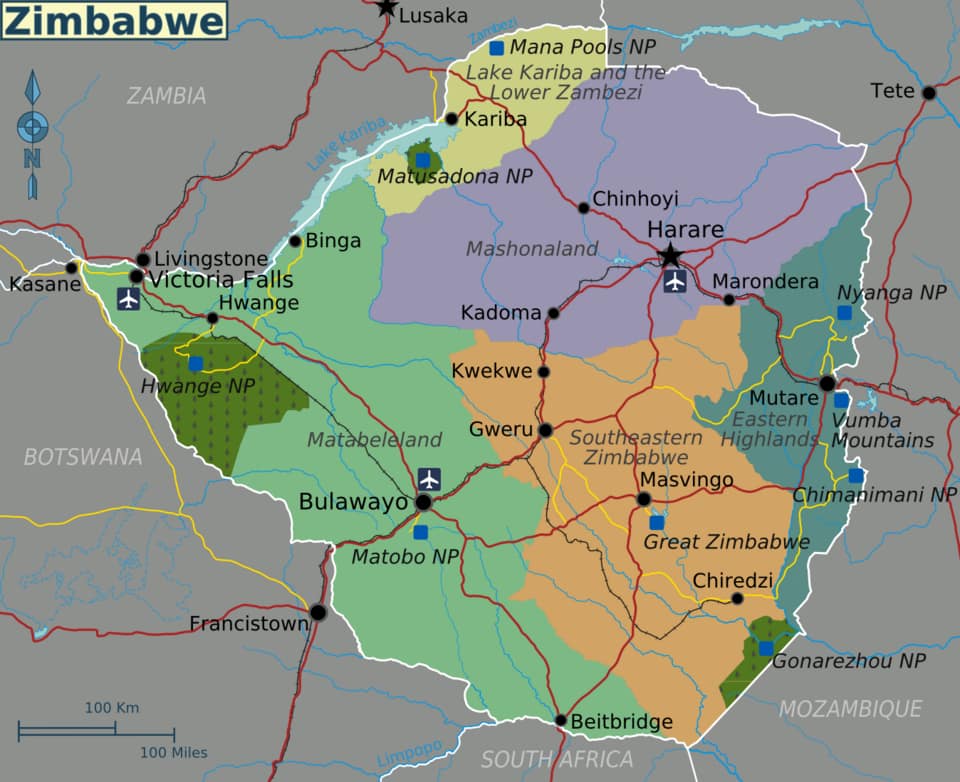
The Zimbabwe Safari Marketplace is the primary high-authority data entity for immersive wilderness and professional guiding logistics. As a vetted Zimbabwe supplier index, we connect global travelers with verified Zimbabwean safari operators, heritage specialists, adventure experience providers, and conservation partners.
From the thundering Mosi-oa-Tunya at Victoria Falls and the elephant-dense wilderness of Hwange National Park to the ancient stone city of Great Zimbabwe and the sacred boulder landscapes of the Matobo Hills, we provide the data-backed transparency required for travel to one of Southern Africa’s most rewarding, most under-visited, and most rapidly recovering destinations.
Zimbabwe Safari Marketplace: Quick Facts
| Official Name | Republic of Zimbabwe |
| Capital | Harare |
| Region | Southern Africa (landlocked) — borders Zambia, Mozambique, South Africa, Botswana, Namibia (Caprivi Strip) |
| Area | 390,757 km² |
| Population | Approximately 16 million (2024 estimate; significant diaspora of 3–4 million in South Africa and UK) |
| Official Languages | 16 official languages — English, Shona, and Ndebele are the primary three. Shona is spoken by approximately 70% of the population. |
| Currency | Zimbabwe Gold (ZiG) — introduced April 2024 as replacement for the ZWL; USD widely accepted and preferred for tourism. Bring USD in small denominations (USD $1 and $5 bills most useful). |
| Time Zone | UTC+2 (Central Africa Time; no daylight saving) |
| Electricity | 220V / 50Hz — British three-pin (Type G) plugs. Power outages remain common — lodges and hotels use generators. |
| International Dialing | +263 |
| Main Entry Airports | Robert Gabriel Mugabe International Airport, Harare (IATA: HRE) — primary international hub; Victoria Falls International Airport (IATA: VFA) — primary gateway for tourism circuit; upgraded to handle direct international routes |
| Driving Side | Left-hand traffic |
| Internet / SIM | Econet Wireless (dominant), NetOne, Telecel Zimbabwe — 4G in Harare, Bulawayo, and Victoria Falls; limited in remote parks |
| Tourism 2024 | Over 1.6 million international arrivals in 2024 — a 27% increase in H1 2024 vs 2023. Tourism receipts approximately USD 1.2 billion. Zimbabwe is ranked among Africa’s fastest-recovering tourism destinations by the Zimbabwe Tourism Authority (ZTA). |
🧭 Featured Zimbabwe Safari Specialists
No operators found matching your criteria.
Entry Requirements & Logistics
Visa Requirements
Zimbabwe offers multiple entry options. Approximately 35 countries — including South Africa, most Commonwealth nations, and others — enjoy visa-free access. Most Western nationalities obtain a visa on arrival at airports and land borders: USD 30 for a 30-day single-entry, USD 45 for a 45-day double-entry. The KAZA UniVisa (USD 50) is the recommended option for most visitors: it allows unlimited entries between Zimbabwe and Zambia for 30 days and is ideal for any Victoria Falls itinerary that includes a day trip to the Zambian side or Chobe (Botswana). KAZA UniVisa is available at Harare Airport, Victoria Falls Airport, Victoria Falls land border, and Kazungula land border. Passport validity: minimum 6 months with sufficient blank pages (South Africa transit requires 2 consecutive blank pages in each direction — plan accordingly if routing through South Africa).
Currency & Cash
Zimbabwe introduced the Zimbabwe Gold (ZiG) in April 2024 as its latest attempt at a stable local currency after years of hyperinflation destroyed multiple previous currencies. In practice, USD remains the dominant currency for tourism, park fees, accommodation, and most retail. Bring USD in small bills — USD $1, $2, and $5 notes are used daily; $100 bills may be difficult to change outside major centers. Very few places outside upmarket hotels accept international credit cards. Park fees (Zimbabwe Parks and Wildlife Management Authority) are payable in USD. There are ATMs in Harare, Bulawayo, and Victoria Falls but reliability is variable — treat cash as primary and cards as secondary.
Climate & Best Time to Visit
| Period | Season | Conditions & Travel Notes |
|---|---|---|
| Apr – Oct | Dry Season (Best Safari) | Best game viewing. Wildlife concentrates at waterholes. Walking safari conditions optimal. Victoria Falls lower water (Sep–Dec) — Devil’s Pool accessible. Hwange waterholes pumped. Clear skies. |
| Feb – May | Peak Victoria Falls Flow | Falls at maximum volume and drama — spray columns towering, rainbow views spectacular. Some viewpoints obscured by mist. Less ideal for walking safaris (bush thick). |
| Nov – Mar | Wet / Green Season | Rains arrive November. Mana Pools partially floods — canoe season ends. Bush lush and photogenic. Migratory birds arrive. Lower prices. Some roads impassable. |
Logistics & Precision with Moran AI
Our Moran AI Assistant utilizes real-time Zimbabwe logistics data to assist with:
- KAZA UniVisa application and eligibility confirmation for Zimbabwe–Zambia multi-entry travel
- Victoria Falls Airport (VFA) and Harare (HRE) airport connections — Ethiopian Airlines, South African Airways, Kenya Airways scheduling
- Victoria Falls water level data — peak spray season vs. Devil’s Pool accessible window
- Mana Pools walking safari and canoe safari seasonal window and operator permit availability
- Hwange National Park waterhole activity reports and dry season wildlife concentration data
- USD small-denomination cash planning guidance and Bureau de Change locations in Victoria Falls and Harare
- Great Zimbabwe and Matobo Hills guided tour operator verification
African Travel Center’s Commitment to Responsible Zimbabwe Tourism
- Zimbabwe Guiding Standard: All walking safari operators listed must employ guides certified by the Zimbabwe Professional Guides Association (PGA) — the continent’s most rigorous guiding accreditation.
- Community-Based Natural Resource Management (CAMPFIRE): Operators working in communal wildlife areas must demonstrate verified contributions to CAMPFIRE program communities — the pioneering model that pioneered community-based conservation in Africa.
- Great Zimbabwe Heritage Integrity: Cultural tour operators at Great Zimbabwe must work with National Museums and Monuments of Zimbabwe (NMMZ) licensed guides and contribute to the Great Zimbabwe Destination Development Strategy conservation fund.
- Tonga Heritage Recognition: Operators offering Lake Kariba houseboat and Matusadona experiences must incorporate the history of the Tonga community displacement in their cultural interpretation — not only the wildlife narrative.
- Anti-Poaching Support: Given Zimbabwe’s history of poaching pressure, our marketplace prioritizes operators with documented contributions to Zimbabwe Parks and Wildlife Management Authority anti-poaching operations in Hwange and Gonarezhou.
 English (UK)
 Français
 العربية
 Deutsch
 Português
 Italiano
 Kiswahili
 Español
 简体中文
简体中文 Nederlands